
- hy218@huiyuansj.cn
- WhatsApp: +86 15162372874
- Mon - Sat 8:00-20:00
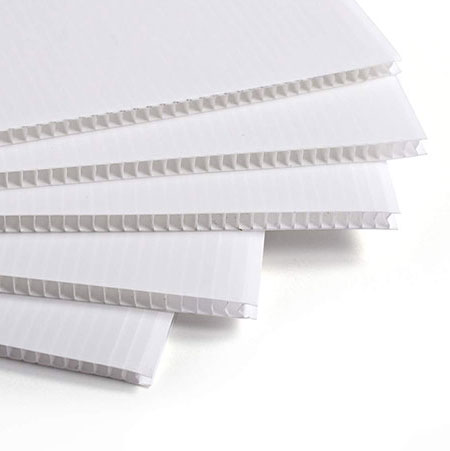
When choosing materials for outdoor advertising, retail displays, event graphics, directional signs, and notices, the sheet material behind the printed message is just as important as the graphic itself. Different plastics provide different combinations of rigidity, weight, weather resistance, printability, and cost. Understanding the main materials used in plastic sign board sheets helps buyers select a solution that matches the intended application, service environment, and expected lifespan.
Polypropylene is one of the most widely used materials for plastic sign boards. It is a lightweight thermoplastic known for its good impact resistance, moisture resistance, and processing characteristics. Polypropylene sheets can be produced in solid or corrugated structures, giving manufacturers flexibility in designing boards for different purposes.
Corrugated polypropylene is popular for temporary signs, promotional displays, real estate notices, event signs, and directional boards. Its fluted internal structure reduces weight while maintaining useful stiffness. This makes large sheets easy to transport, install, cut, and handle.
Another advantage is moisture resistance. Polypropylene does not readily absorb water, so boards made from it can be suitable for many indoor and outdoor environments. With appropriate surface treatment and printing technology, graphics can also remain clear and attractive during use.
PVC, or polyvinyl chloride, is another important material used in plastic sign board sheets. Compared with corrugated polypropylene, rigid PVC generally provides a harder and more solid surface. This makes it useful when a sign needs a more substantial appearance and stable flatness.
Rigid PVC sheets can support various printing and finishing processes. Their smooth surface can provide a suitable base for high-resolution graphics, lettering, logos, and detailed visual information. They are often considered for indoor signage, retail displays, information boards, and applications where a firm sheet structure is preferred.
PVC is available in different thicknesses and formulations, allowing buyers to select a board according to stiffness. However, PVC can be heavier than some lightweight polypropylene options, so weight should be considered when designing large signs or portable displays.
Polycarbonate is a high-performance thermoplastic recognized for its excellent impact resistance. For plastic sign board sheets used in demanding environments, polycarbonate can provide additional durability compared with many standard plastics.
The material can also offer good dimensional stability and transparency options, although opaque grades are commonly selected for signage. Polycarbonate is useful when signs may be exposed to physical impact, frequent handling, or conditions where a stronger sheet is desirable.
Its higher performance can come with a higher material cost. Therefore, polycarbonate is generally most appropriate when durability and impact resistance justify the additional investment rather than when the primary objective is producing large quantities of economical temporary signs.
Acrylic, also known as PMMA, is valued for its smooth surface, attractive appearance, and excellent optical properties. While it is not always the first choice for lightweight temporary signage, acrylic can be an effective material for decorative signs, retail displays, interior identification boards, and applications where visual presentation is important.
Acrylic sheets are available in many colors, thicknesses, and surface finishes. They can be cut, engraved, polished, and printed to create customized signs. Transparent and translucent grades can also be combined with lighting to create visually distinctive displays.
The main consideration is that acrylic is more rigid and comparatively brittle than flexible plastic materials. It therefore requires suitable handling and installation, particularly in applications where impact is possible.
PET and PETG are polyester-based plastics that can also be used in signage and display products. PETG is especially valued for its clarity, toughness, and ease of thermoforming. These properties make it suitable for customized displays and shaped sign components.
PET-based materials can provide a clean appearance and are compatible with different fabrication methods. They may be selected for indoor promotional displays, protective graphic panels, point-of-sale applications, and other projects requiring a balance between appearance and practical performance.
The correct grade should always be selected according to the printing process, thickness, forming requirements, and intended environment.
ABS, or acrylonitrile butadiene styrene, is a tough engineering plastic that can be used for specialized signage and display components. It offers good impact resistance and can be processed through cutting, drilling, thermoforming, and other fabrication methods.
ABS is more relevant to applications requiring structural performance or shaped components than to basic low-cost temporary signs. It can be useful when the sign design includes formed parts, protective housings, or customized structures.
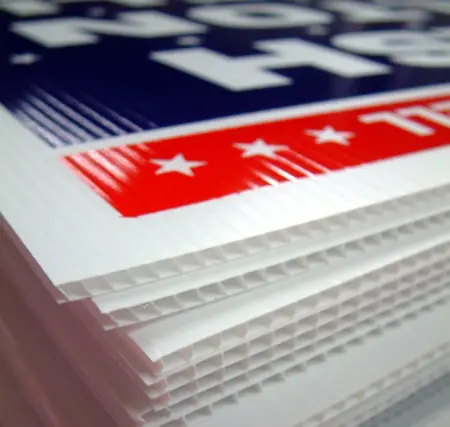
The best material depends on more than price. Buyers should first consider whether the sign will be used indoors or outdoors, how long it needs to remain in service, and how it will be installed.
For lightweight temporary signs, corrugated polypropylene is often a practical starting point because it combines low weight, moisture resistance, easy handling, and economical production. For rigid indoor signage, PVC may provide a better balance of flatness, appearance, and printability. Polycarbonate becomes more attractive when impact resistance is a priority, while acrylic is suitable when appearance and surface quality are major considerations.
Thickness is also important. Thicker sheets normally provide greater rigidity, but they may increase material consumption, shipping weight, and overall cost. Buyers should select thickness according to the size of the sign, mounting method, expected wind or handling conditions, and required stiffness.
Printing compatibility should also be evaluated. Depending on the plastic, manufacturers may use UV printing, screen printing, digital printing, adhesive graphics, or other finishing techniques. Surface treatment can improve ink adhesion and help achieve consistent graphic quality.
Choosing the right material for plastic sign board sheets requires a balance between performance, appearance, fabrication, and budget. Polypropylene is a strong choice for lightweight signage, while PVC offers rigidity and a smooth printable surface. Polycarbonate provides higher impact resistance, acrylic emphasizes appearance, and PETG and ABS serve specialized applications.
By matching material properties with the actual application, buyers can obtain signs that are easier to produce, transport, install, and maintain. This approach can also help control costs while ensuring reliable performance.
