Corrugated Sign Material Types and Selection Guide

0 Comments

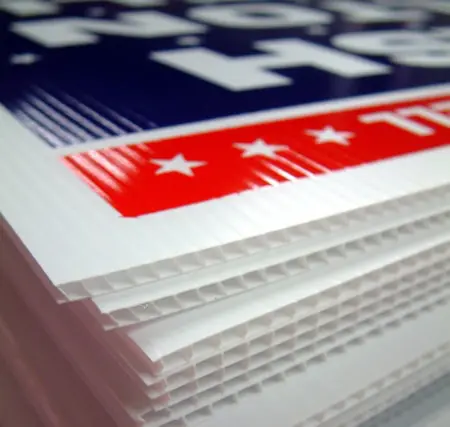
Corrugated sign material refers to lightweight, fluted plastic sheet substrates widely used in advertising, retail signage, construction warnings, and temporary promotional displays. The material is typically made from polypropylene (PP) or polyethylene (PE) and features a twin-wall structure similar to corrugated cardboard, but with significantly higher durability and weather resistance.

In modern signage systems, corrugated plastic boards are valued for their balance of cost efficiency, printability, and outdoor performance, making them a preferred choice for short-term and medium-term visual communication applications.

signage plastic material

Main Types of Corrugated Sign Material

Different applications require different structural and surface characteristics. Below are the most common categories of corrugated sign materials used in the industry.

1. Standard Polypropylene Corrugated Sign Material

This is the most widely used type in the signage industry.

Key Characteristics:

  • Material: Polypropylene (PP)
  • Structure: Twin-wall fluted sheet
  • Thickness range: 2mm–10mm
  • Lightweight and rigid
  • Excellent moisture resistance

Advantages:

  • Low production cost
  • Easy to cut and fabricate
  • Suitable for digital printing, screen printing, and UV printing
  • Recyclable and environmentally friendly

Typical Applications:

  • Yard signs
  • Election campaign boards
  • Real estate signage
  • Temporary retail displays

Standard PP corrugated boards dominate the market due to their versatility and affordability.

2. Corona-Treated Corrugated Sign Material (Print-Enhanced Surface)

This type is specially treated to improve ink adhesion.

Key Characteristics:

  • Surface treated via corona or flame treatment
  • Enhanced surface energy for better ink bonding
  • Compatible with UV flatbed printing

Advantages:

  • Improved print sharpness
  • Better color saturation
  • Reduced ink peeling or fading
  • Suitable for high-resolution graphics

Typical Applications:

  • Advertising boards requiring premium visual quality
  • Indoor retail displays
  • Exhibition signage
  • Branding panels

For businesses focusing on visual impact, corona-treated corrugated sign material is often the preferred choice.

3. UV-Resistant Corrugated Sign Material

This variant is designed for extended outdoor exposure.

Key Characteristics:

  • Contains UV stabilizers in raw material
  • Slower degradation under sunlight
  • Maintains structural integrity under harsh conditions

Advantages:

  • Longer outdoor lifespan (6–24 months depending on environment)
  • Reduced yellowing and brittleness
  • Stable performance under temperature fluctuations

Typical Applications:

  • Roadside advertising boards
  • Construction site signage
  • Outdoor directional signs
  • Event signage exposed to sunlight

UV-resistant corrugated sheets are essential for long-term outdoor campaigns.

4. Anti-Static Corrugated Sign Material

This type of corrugated plastic sign is designed for environments sensitive to static electricity.

Key Characteristics:

  • Anti-static additives integrated into polymer structure
  • Surface resistivity control
  • Dust-repellent properties

Advantages:

  • Reduces dust accumulation
  • Protects electronic-sensitive environments
  • Cleaner surface appearance over time

Typical Applications:

  • Electronics manufacturing plants
  • Cleanrooms and workshops
  • Precision industrial environments

Though niche, anti-static corrugated sign material is critical in high-tech industries.

corrugated plastic signs

5. Flame-Retardant Corrugated Sign Material

Safety-focused applications require flame-retardant properties.

Key Characteristics:

  • Treated with flame-retardant additives
  • Complies with industrial fire safety standards (varies by region)
  • Self-extinguishing properties

Advantages:

  • Enhanced safety in indoor environments
  • Reduced fire spread risk
  • Suitable for regulated commercial spaces

Typical Applications:

  • Shopping malls
  • Airports
  • Public transportation hubs
  • Indoor exhibitions

This type is widely used in regulated environments where fire safety compliance is required.

6. High-Density Corrugated Sign Material

This version offers increased rigidity and mechanical strength.

Key Characteristics:

  • Thicker wall structure
  • Higher gram weight per square meter
  • Improved impact resistance

Advantages:

  • Strong load-bearing capacity
  • Resistant to bending and deformation
  • Suitable for freestanding signage structures

Typical Applications:

  • Large outdoor display boards
  • Construction barriers
  • Heavy-duty advertising panels

High-density sheets are often selected for structural signage applications.

Key Factors for Selecting Corrugated Sign Material

Choosing the right corrugated sign material depends on multiple technical and environmental factors.

1. Application Environment

The first consideration is where the sign will be used.

  • Indoor environments → standard or corona-treated sheets
  • Outdoor environments → UV-resistant sheets
  • Industrial environments → anti-static or flame-retardant sheets

Environmental exposure determines durability requirements.

2. Required Service Life

Different projects require different lifespans:

  • Short-term (days to weeks): lightweight standard PP boards
  • Medium-term (1–6 months): corona-treated or standard UV-enhanced sheets
  • Long-term (6–24 months): UV-resistant or high-density sheets

Selecting correctly reduces unnecessary material costs.

3. Printing Technology Compatibility

Corrugated sign material must match the printing method:

  • UV flatbed printing → best compatibility
  • Screen printing → standard PP sheets
  • Digital solvent printing → requires surface-treated material

Poor compatibility leads to ink adhesion failure and reduced visual quality.

4. Mechanical Strength Requirements

Load-bearing and structural stability are critical in many applications.

  • Lightweight signage → 2–3mm thickness
  • Medium-duty displays → 4–5mm thickness
  • Heavy-duty structures → 6mm+

Thickness directly affects rigidity and wind resistance.

5. Budget Optimization

Cost control is a major factor in large-scale advertising campaigns.

  • Standard PP sheets → lowest cost
  • Treated or UV-resistant sheets → moderate cost
  • Specialty sheets (flame-retardant, anti-static) → higher cost

Balancing performance and budget is essential for procurement decisions.

Industry Applications of Corrugated Sign Material

Corrugated plastic signage is widely used across multiple industries.

Advertising and Marketing

  • Outdoor promotional boards
  • Trade show displays
  • Retail point-of-sale signage

Construction Industry

  • Safety warning signs
  • Site direction boards
  • Temporary barriers

Political Campaigns

  • Election yard signs
  • Public messaging boards

Logistics and Warehousing

  • Instruction signage
  • Warehouse labeling systems

Event Management

  • Temporary navigation signage
  • Festival and exhibition branding

Advantages of Corrugated Sign Material Over Alternatives

Compared with traditional signage materials, corrugated plastic offers several advantages:

  • Lightweight yet durable structure
  • Water and moisture resistance
  • Reusable and recyclable
  • Low transportation cost
  • Easy cutting, folding, and installation
  • Compatible with multiple printing technologies

These benefits make it a highly efficient solution for temporary and semi-permanent signage systems.

Common Mistakes When Choosing Corrugated Sign Material

Many buyers make errors that affect performance and cost efficiency.

1. Ignoring UV Requirements

Using standard sheets outdoors often leads to premature aging and fading.

2. Over-Specifying Material

Selecting flame-retardant or high-density sheets for short-term indoor use increases unnecessary costs.

3. Incorrect Thickness Selection

Thin boards for large outdoor signs may result in bending or wind damage.

4. Poor Print Compatibility Matching

Using untreated sheets for high-resolution UV printing can reduce image quality.

Future Trends in Corrugated Sign Material

The signage industry is evolving toward more advanced materials.

1. Eco-Friendly Recycling Materials

Increased use of recycled PP and biodegradable additives.

2. High-Definition Print Surfaces

Improved coatings for sharper and more durable printing.

3. Smart Signage Integration

Embedding QR codes, NFC, and digital tracking elements.

4. Lightweight Structural Optimization

New designs aim to reduce material usage while maintaining strength.
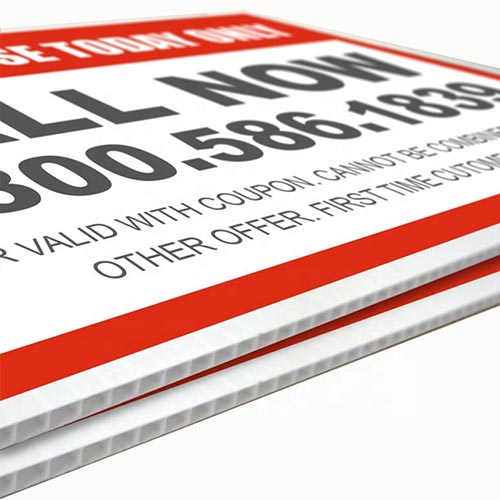
corrugated yard signs/coroplast sign

Conclusion

Corrugated sign material plays a critical role in modern visual communication systems due to its flexibility, durability, and cost efficiency. Understanding the different types—standard, UV-resistant, corona-treated, anti-static, flame-retardant, and high-density variants—allows businesses to make more informed procurement decisions.

By selecting the right material based on environmental conditions, printing requirements, and structural demands, companies can significantly improve signage performance while optimizing costs.

For advertising agencies, construction companies, and retailers, corrugated plastic remains one of the most practical and scalable solutions in the global signage industry.

Leave your contact INFO here, we will get back to you within 8 hours. (Get a free sample and latest price)


    [honeypot honeypot-292]

    Categories: