
- hy218@huiyuansj.cn
- WhatsApp: +86 15162372874
- Mon - Sat 8:00-20:00

A corrugated plastic sign board is a practical signage solution for businesses, construction sites, events, retail stores, real estate companies, schools, and many other applications. Lightweight, durable, easy to print, and simple to process, this type of sign board offers an effective alternative to heavier materials such as wood, metal, and solid plastic sheets.
The structure of the board makes it particularly suitable for temporary and semi-permanent signage. However, choosing the right board requires consideration of thickness, size, printing method, surface requirements, installation conditions, and expected service life. Understanding these factors can help businesses select a sign board that delivers better performance while keeping overall costs under control.

One of the most important benefits is its low weight. Large signs can be transported, handled, and installed more easily than comparable metal or wood signs.
This is especially useful for temporary signs that need to be moved frequently. Workers can carry multiple panels to an installation area without requiring heavy lifting equipment.
Polypropylene corrugated plastic has good resistance to moisture and can be used in many outdoor environments. Unlike paper-based signage, it does not readily absorb water, making it suitable for outdoor promotional signs, construction signs, and real estate signs.
For long-term outdoor applications, however, it is important to consider UV exposure. If the sign will remain outdoors for an extended period, UV-resistant materials, inks, or protective treatments may help improve its service life.
A corrugated plastic sign board provides a relatively smooth surface for digital printing, screen printing, and other graphic processes. Businesses can print brand colors, product information, promotional messages, directional arrows, safety instructions, and other visual content directly onto the board.
High-quality printing is particularly important for signs that need to attract attention from a distance.
Corrugated plastic panels can be processed using common fabrication techniques. They can be cut into rectangular, square, triangular, or custom shapes according to the application.
Holes can also be punched or drilled for cable ties, screws, hooks, stakes, and other mounting accessories. This makes custom signage production much more flexible.
For businesses requiring hundreds or thousands of signs, material cost is an important consideration. Corrugated plastic offers a combination of low weight, easy processing, and efficient production that can make it a cost-effective signage material.
The actual price depends on board thickness, dimensions, color, printing requirements, order quantity, and additional processing.
A corrugated plastic sign board can be used in a wide variety of industries and environments.
Real estate companies frequently use corrugated plastic boards for property advertisements, open-house signs, directional signs, and agent information boards.
The lightweight construction makes the signs easy to install with stakes. They can also be produced in bright colors with large text and graphics to attract attention from passing pedestrians and drivers.
Construction companies use these boards for safety notices, project information, warnings, directional signs, and temporary site identification.
Because construction sites often require temporary signage, a lightweight and easy-to-process material can simplify installation and replacement.
Retail stores can use corrugated plastic signage for sales promotions, special offers, product launches, seasonal campaigns, and temporary displays.
Businesses can order custom-printed panels with different messages and replace them as marketing campaigns change.
Events, exhibitions, trade shows, sports competitions, and community activities often require temporary directional and informational signs.
Corrugated plastic panels can be printed with arrows, schedules, logos, booth information, entrance instructions, and sponsor advertisements. Their low weight also helps reduce transportation and setup effort.
Outdoor campaign signs and community notices often require large quantities of inexpensive, lightweight panels. Corrugated plastic is commonly selected because it can accommodate large graphics and can be mounted using stakes or other simple supports.
Factories, warehouses, workshops, and construction areas can use corrugated plastic panels for temporary safety messages. Common examples include restricted-area signs, hazard warnings, emergency directions, and equipment instructions.
For regulated safety signage, businesses should ensure that the design, color, symbols, and installation method meet applicable local requirements.
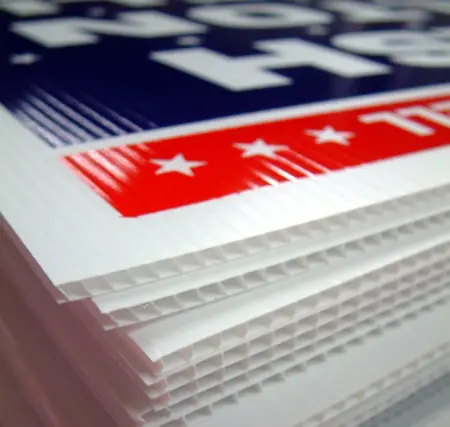
Thickness is an important factor when purchasing a corrugated plastic sign board. Thicker boards generally provide greater rigidity and can perform better when the sign is large or exposed to wind.
Thinner boards may be suitable for indoor signs, short-term promotions, and smaller displays where structural strength is less important.
When selecting thickness, consider:
A small indoor promotional panel does not necessarily need the same thickness as a large outdoor sign mounted on stakes.
Different signage materials have different strengths.
Metal signs can provide excellent rigidity and long-term durability, but they are generally heavier and may require more complex processing.
Wood signs can offer a traditional appearance but may require additional protection against moisture and environmental exposure.
Solid plastic sheets provide a smooth and rigid surface, but they can be heavier and use more raw material than fluted corrugated plastic panels.
Corrugated plastic offers a useful balance between weight, rigidity, printability, processability, and cost. This makes it particularly attractive for temporary, promotional, and medium-term signage.
Manufacturers can often customize corrugated plastic sign boards according to specific project requirements.
Common customization options include:
Businesses ordering large quantities should provide detailed artwork, dimensions, mounting requirements, and intended application before production. This helps manufacturers recommend an appropriate board specification.
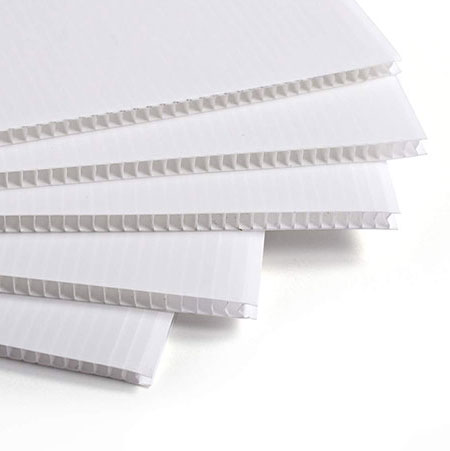
A corrugated plastic sign board combines lightweight construction, good moisture resistance, easy fabrication, attractive printing capabilities, and cost efficiency. These characteristics make it suitable for real estate advertising, construction sites, retail promotions, exhibitions, events, safety notices, and many other signage applications.
When selecting a board, businesses should look beyond price alone. Thickness, dimensions, printing quality, UV resistance, mounting method, and expected service conditions all influence the final performance of the sign.
By matching the board specification to the actual application, companies can obtain durable, professional-looking signage while keeping production, transportation, and installation costs manageable. For large-volume or customized projects, working directly with an experienced corrugated plastic manufacturer can also provide greater flexibility in material selection, printing, processing, and packaging.
