
- hy218@huiyuansj.cn
- WhatsApp: +86 15162372874
- Mon - Sat 8:00-20:00

When choosing materials for temporary or permanent signage, thickness can have a significant impact on strength, appearance, durability, and cost. Correx board signage is widely used for advertising boards, real estate signs, construction notices, event displays, directional signs, and promotional graphics because corrugated polypropylene offers a practical balance between weight and performance.
However, not every signage project requires the same board thickness. Thin Correx boards can be economical and easy to handle, while thicker boards provide greater rigidity and impact resistance. Understanding the available thickness options can help businesses select the right material for each application.

Correx board signage is made from corrugated polypropylene, a lightweight plastic sheet with a fluted internal structure. The material consists of two outer layers connected by internal ribs, creating a board that is stronger than a solid sheet of similar weight.
The surface can be printed with graphics, text, logos, images, safety messages, or directional information. Correx is also easy to cut, drill, fold, and install, making it suitable for customized signage.
One of its main advantages is its relatively low weight. Large signs can be transported and installed more easily than many traditional rigid signage materials. Correx is also resistant to moisture, making it suitable for many indoor and outdoor applications.
The thickness of Correx board directly influences its physical properties. As thickness increases, the board generally becomes more rigid and better able to maintain its shape over larger unsupported areas.
Thickness also affects handling. A thin sheet may be easier to cut and fold, whereas a thicker board can provide a more substantial appearance and better resistance to bending.
For Correx board signage, selecting thickness should therefore depend on factors such as sign size, installation method, expected exposure, wind conditions, handling frequency, and whether the sign will be used temporarily or for an extended period.
There is no single thickness that is ideal for every project.
Around 2 mm is one of the thinner options available for corrugated polypropylene signage. It is particularly suitable when low weight and economical material consumption are important.
Thin Correx boards can be used for short-term promotional displays, indoor signs, point-of-sale graphics, lightweight information boards, and applications where the sign is supported by another structure.
The main benefit of this thickness is easy handling. It can be cut quickly and transported efficiently. However, because it offers less rigidity than thicker boards, it may not be the best choice for large outdoor signs exposed to strong wind.
3 mm Correx is a popular general-purpose thickness for signage. It provides a useful balance between weight, stiffness, printability, and price.
This thickness is commonly used for real estate boards, event signs, promotional displays, construction notices, election signs, and directional signage. It can be attached to fences, stakes, walls, frames, or other supporting structures.
For many standard signage projects, 3 mm provides sufficient rigidity without adding unnecessary weight. It is therefore a practical choice for businesses that need large quantities of printed signs.
A 4 mm board provides greater rigidity and structural stability than thinner options. It is suitable for signs that are larger, need additional support, or will be handled more frequently.
For example, businesses may choose 4 mm Correx for outdoor advertising boards, larger real estate signs, construction signage, exhibition displays, and directional boards.
The additional thickness can help reduce bending and improve the overall appearance of a larger sign. It may also provide better resistance to mechanical handling during transportation and installation.
5 mm Correx is designed for applications where increased stiffness is a priority. Compared with 2 mm or 3 mm boards, it provides a more substantial structure and can perform better when the sign has a larger unsupported area.
This thickness can be considered for long-term outdoor signage, larger promotional boards, display panels, industrial notices, and applications where signs may experience repeated handling.
Although thicker material generally increases material usage and weight, the additional rigidity can justify the cost when structural performance is important.
For demanding signage applications, Correx boards can also be produced at approximately 6 mm or other customized thicknesses. These thicker boards are useful when a project requires enhanced rigidity, dimensional stability, or a more substantial display panel.
They may be appropriate for large-format signs, exhibition structures, industrial displays, reusable promotional boards, and applications where the sign needs to remain relatively rigid without a separate heavy substrate.
The exact thickness should be selected according to the dimensions and installation conditions rather than simply choosing the thickest available option.
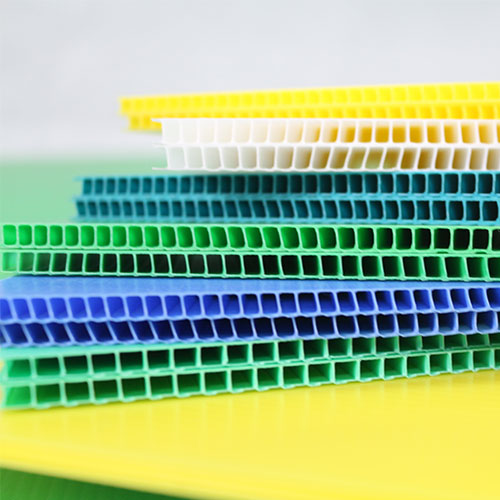
Different thicknesses offer different advantages. Thin boards are lightweight and economical, while medium-thickness boards provide a balance of flexibility and rigidity. Thicker boards are better suited to large or demanding applications.
Rather than choosing thickness based only on price, buyers should evaluate total project requirements. A board that is too thin may require additional support, while an unnecessarily thick board may increase material and transportation costs without providing meaningful benefits.
For commercial signage projects, standard thicknesses may not always meet specific requirements. Manufacturers can often customize board dimensions, thickness, surface treatment, printing, colors, and cutting shapes.
Custom Correx board signage can be produced according to the required sign dimensions and installation method. Businesses can also request different flute structures or board specifications depending on performance requirements.
When ordering customized signage, buyers should provide information about sign size, quantity, intended location, printing method, mounting method, and expected usage period. This allows the manufacturer to recommend an appropriate board construction.
Choosing the correct thickness is an important part of designing effective Correx board signage. Options from approximately 2 mm to 6 mm and beyond can serve different purposes, from lightweight indoor promotional signs to large outdoor and industrial displays.
For many general-purpose applications, 3 mm provides a useful combination of affordability, weight, and rigidity. Thinner boards can be suitable for lightweight or supported signs, while 4 mm, 5 mm, and thicker options can provide additional stiffness for larger or more demanding applications.
By considering sign size, installation method, environmental conditions, service life, and budget, businesses can select the most suitable Correx thickness and achieve a signage solution that is practical, durable, and cost-effective.
